
Xi'an Xu&Hui Electromechanical Technology Co., Ltd.
Xi'an Xu&Hui Electromechanical Technology Co., Ltd.
- China
- Verified Supplier
Sản phẩm
Cable Identifier

Cable Identifier Identification Of Live And De-Energized Cables
-
Category: Cable Identifier
-
Status: Available
-
ID: 26
Product Specification
| Jaw diameter | Transmitter clamp: Φ125mm; Receiver clamp: Φ200mm; | Power supply: | Transmitter 12VDC lithium battery, handheld receiver 5 battery. |
| Packaging Details | Wooden case | Pulse period | 2.75S/time |
| Supply Ability | 500 units/month | Test range | Direct connection method: 0Ω~1k Coupling method: 0Ω~50Ω; |
| Payment Terms | T/T | Delivery Time | 5-8 work days |
| Output voltage | I gear (direct connection method): 150V II gear (coupling method): 250V; | Identification method | judge by the direction of needle swing |
| Pulse current | 0~10A | Place of Origin | Xi'an, Shaanxi, China |
| Model Number | XHSB505B | Certification | CE |
| Brand Name | XZH TEST |
XHSB505B
This cable identifier is based on the on-site identification of multiple cables urgently needed by high-voltage cable construction, installation and maintenance personnel, referring to foreign advanced technology, and under the guidance of electromagnetic field theory, it is developed by using modern electronic technology and tooling technology.
A very difficult question is often encountered in field operations such as power cable laying, migration, maintenance, troubleshooting: which cable are we looking for? Especially in many cable channels with the same specification, the construction workers are at a loss what to do. This device can help you solve this problem quickly and accurately.
Working principle
Non-charged cable detection: The transmitter mainly generates a special pulse signal, which is added to the cable to be identified through the connecting line. According to the principle of electromagnetic induction, an induction signal consistent with the law of the transmitted signal must be generated along the cable. It is used in the test site. The high-sensitivity receiving clamp plus the handheld receiver detects all the cables on site, and the cable to which the signal is added can be accurately found out according to the indication of the handheld receiver meter (that is, the uncharged cable to be identified).Live cable detection: The transmitter mainly generates a special pulse signal, which is added to a point of the live cable to be identified through a special transmitting clamp. According to the principle of electromagnetic induction, an induction signal consistent with the law of the transmitted signal must be generated along the cable. During the test Use highly sensitive receiving pliers and a handheld receiver to detect all the cables on the site, and you can accurately find out the cable with the added signal (that is, the live cable to be identified) according to the instructions of the handheld receiver.
Features
The recognition is accurate.
Large identification jaws fit a wide variety of cables.
very easy to operate.
Instructions are clear and intuitive.
The main and auxiliary parts are portable and beautiful.
The receiving signal strength of the receiver is adjustable.
Both live and dead cables can be tested.
Small and portable, light weight.
This instrument consists of a transmitter, a transmitting clamp, a receiving clamp, a handheld receiver, etc.
Transmitter panel:

1. Grounding pole: equipment safety grounding terminal;
2. Output positive pole: transmitter output positive, connect the red output line;
3. Output negative pole: transmitter output negative, connect the black output line;
4. Charging: DC12V charging port, connect the 12V charger to start charging;
5. Power switch: turn on/off the working power;
6. Gear switch: "Ⅰ" for non-powered cable identification; "Ⅱ" for powered cable identification;
7. Power indicator: real-time indication of battery power when the built-in battery is working;
8. Ammeter: displays the instantaneous average value of the output current.

1. The handheld receiver has an adjustment knob that can adjust the received signal strength (clockwise rotation: the received signal strength increases; counterclockwise rotation: the received signal strength decreases; and it has a switch function).
2. There is a BNC interface on the lower side of the handheld receiver, which is connected to the receiving clamp to receive the signal when used.
Technical Parameters
| Identification method | Judging by the direction in which the pointer swing; |
| Jaw size(diameter) |
Transmitter clamp: Φ125mm; |
| Output voltage | I gear (direct connection method): 150V, II gear (coupling method): 250V; |
| Test range |
Direct connection method: 0Ω~1k |
| Pulse current | 0~10A; |
| Pulse cycle | 2.75S/time; |
| Power supply | 12VDC lithium battery for the transmitter, AA battery for the handheld receiver. |
Instructions for identification of non-charged cables - direct connection method

1. Disconnect the armor at both ends of the cable from the ground, clamp the red clip of the output wire of the transmitter on the core wire of the cable to be tested (good phase or phase with higher insulation), and clamp the black clip of the output wire of the transmitter on the core wire of the cable to be tested. On the ground point or ground stake, the corresponding core wire of the cable is connected to the ground point or ground stake at the far end, as shown in the figure above.
2. Turn on the power switch of the main body of the transmitter, select the "Ⅰ" position of the gear switch, the power switch light flashes three times, and the pointer of the ammeter also swings three times at the same frequency, and the pulse signal is output cyclically in turn.
3. Connect the receiver to the receiving clamp, and the receiving clamp is clamped on the cable to be tested.
4. Note that the direction of the arrow of the receiving clamp is the direction of current inflow (positive direction), otherwise the swing of the watch hand is just the opposite.
5. Turn the receiver adjustment knob clockwise, and when you hear a "beep", turn on the receiver switch. Then adjust the receiving signal strength of the receiver to an appropriate position. At this time, only the signal can be received on the cable that adds the signal, and the signal swing frequency is consistent with the transmitter frequency, and a "di-di-di" sound is issued.
Live Cable Identification Instructions - Coupling Method

Coupling method notes:
1. No need to do any operation on the cable under test, just clamp the launch clamp on the cable for testing.
2. Both ends of the cable sheath must be well grounded, otherwise the coupling current will decrease with the increase of the grounding resistance.
3. If the sheath at both ends is not grounded or the middle of the sheath is disconnected, the coupling method cannot be used.
4. When the launching pliers are inserted into the cable, the direction of the arrow on the pliers points to the end of the cable.
5. Keep the receiving clamp and transmitting clamp at a distance of 2 meters as much as possible.
Method:
1). Connect the output end of the transmitter to the launch clamp, and clamp the launch clamp to the proper position of the live cable to be identified, as shown in the figure above.
2). Turn on the power switch of the main unit of the transmitter and select the "II" position switch. The power switch light flashes three times, and the pointer of the ammeter also swings three times at the same frequency, and the pulse signal is output cyclically in turn.
3). Connect the receiver to the receiving clamp, and the receiving clamp is clamped on the cable to be tested.
4). Note that the direction of the arrow of the receiving clamp is the direction of current inflow (positive direction), otherwise the hands of the watch will swing in the opposite direction.
5). Turn the receiver adjustment knob clockwise, and when you hear a "beep", turn on the receiver switch. Then adjust the receiving signal strength of the receiver to a suitable position. At this time, only the signal can be received on the cable that adds the signal, and the signal swing frequency is consistent with the output switching frequency of the transmitter, and the sound of "di-di-di" will be issued.
Packing List
| Transmitter | 1 |
| Receiver | 1 |
| Charger | 1 |
| Output line-red | 1 |
| Output line-black | 1 |
| Transmitting clamp | 1 |
| Receiving clamp | 1 |
| 5AA battery | 2 |


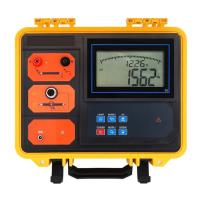
Energized and de-energized cable identifier
-
Category: Cable Identifier
-
Status: Available
-
ID: 27
Product Specification
| AC current range | 0.00A~5000A ,50Hz/60Hz | Packaging Details | wooden packaging |
| Color | Yellow | Cable voltage range | AC 0.00V~600V,50Hz/60Hz |
| Supply Ability | 100 unit per month | Payment Terms | T/T |
| Delivery Time | 15 work days | Multiple frequency | 625Hz、1562Hz、2500Hz、10kHz |
| Place of Origin | Shaanxi | Model Number | XHSB505DS |
| Brand Name | XZH TEST |
XHSB505DS
I .Description
XHSB505DS live cable identification instrument, also known as cable identification instrument, multi-function cable identification instrument, and intelligent cable identification instrument, is designed for power cable engineers and cable workers to solve the technical problems of cable identification. The user can accurately identify one of the target cables from the multiple cables through the instrument, so as to avoid accidentally sawing the live cables and causing serious accidents. The cable identification starts from the operation at both ends of the cable. The double numbering at both ends of the cable must be ensured to be accurate. This instrument is designed with PSK technology combined with precise algorithms. No matter how reliable the memory of on-site staff is, it cannot replace the recognition of professional instruments. This product also has the functions of live cable identification, power failure cable identification, AC current test, and AC voltage test. It is composed of a transmitter, a transmitting current clamp, a receiver, and a receiving flexible current clamp.
Transmitter: It transmits signals to the target cable during the identification of live cables and power-off cables. Built-in high-performance rechargeable lithium battery, automatic impedance matching, and automatic protection. The transmitter adopts an integrated special toolbox design, uses polypropylene plastic as raw material, and adds new composite fillers for one-time injection molding. It has low density, strength, rigidity, hardness, wear resistance, heat resistance, and insulation performance. The cabinet can withstand a pressure of about 200kg, the host's large LCD displays the remaining battery power in real time, white backlight, and dynamic indication of the emission signal, which is clear at a glance.
Transmitting clamp: When the live cable is identified, the transmitting clamp couples the signal from the transmitter to the target cable. The jaw size is Φ120mm. The transmitting clamp has directivity. The transmitting signal flows in from the direction indicated by the arrow on the transmitting clamp.
During live identification: use calipers to couple output pulse currents, emit four frequencies: 625Hz, 1562Hz, 2500Hz, 10kHz, couple to the target cable (target cable is a three-core armored cable) through the transmitter, and inject composite pulses into the cable core Current signal, the pulse current generates an electromagnetic field around the target cable for the receiver and flexible current clamp to detect and identify; because the pulse current is directional, the detection is also directional.
When power failure identification: Directly connected output pulse current is used to inject pulse encoding current signal into the cable core. This current generates an electromagnetic field around the target cable for the receiver and flexible current clamp to detect, decode, and identify; because the current has directivity, so detection is also directional.
Receiver: It is a handheld device, 3.5-inch color LCD screen, built-in high-speed microprocessor, combined with precise algorithms, to identify and decode the pulse code current signal of the transmitter, and has a signal strength calibration function to display signal strength and detection results. Exquisite and intuitive; dynamic display of color scale bars, clear at a glance, successful cable identification check mark, non-target cable check mark, can quickly and automatically identify the target cable. At the same time, the testable voltage range is AC 0.00V~600V (50Hz/60Hz), the measurable AC current range is AC 0.00A~5000A (50Hz/60Hz), and the measurable current frequency is 45Hz~70Hz.
Flexible current clamp: It is a Rockwell coil with excellent transient tracking ability, can quickly identify the pulse code current generated by the transmitter, and is suitable for thick cables or irregularly shaped conductors. The inner diameter of the jaw is about 200mm, and it can clamp cables below Φ200mm, without disconnecting the tested circuit, non-contact measurement, safe and fast.
Special note: This cable identification instrument has both live cable identification and power failure cable identification functions. When power failure cable identification, it is strictly forbidden to connect to the live cable. Live cable identification is only applicable to three-core armored cables. When identifying, the transmitting clamp and receiving clamp cannot be mixed, and the direction of the input signal must be consistent.
II. Technical specifications
- Baseline conditions and working conditions
| Influence | Baseline | working | Remarks |
| Ambient temperature | 23℃±1℃ | -10℃~40℃ | / |
| Environmental wetness | 40%~60% | <80% | / |
| Measured voltage and current frequency | 50Hz±1Hz | 45Hz~70Hz | When testing voltage and current |
| Receiver working voltage | 7.4V±0.5V | 7.4V±1V | / |
| Transmitter operating voltage | 11.1V±0.5V | 11.1V±1.5V | / |
| External electric field, magnetic field | Should be avoided | ||
| Location of the cable under test | The cable under test is at the approximate geometric center of the flexible current clamp | ||
- Transmitter specifications
| Function | Transmit a composite pulse frequency current signal, display the remaining battery voltage, and dynamically indicate the transmission status |
| Power supply | 11.1V large-capacity rechargeable lithium battery, fully charged and continuously working for about 8 hours |
| Output method | Caliper coupling during power-on recognition; direct output during power-off recognition |
| Transmit frequency | 625Hz, 1562Hz, 2500Hz, 10KHz (when electrified identification), press the up and down arrow keys to adjust the transmission frequency |
| Pulse voltage | 500V (when power failure is recognized) |
| Pulse current | Maximum 5A (depending on the size of the loop resistance) |
| Pulse frequency | 1 time/sec |
| Pulse Width | 2ms |
| Launch clamp inner diameter | φ120mm |
| Test line length | 3 meters, with alligator clip, 1 red and black each |
| Launch clamp size | Length, width and thickness 300mm×175mm×50mm |
| Launch clamp inner diameter | φ120mm |
| Launching clamp wire length | 2m |
| Ground pin size | Length, width and thickness 225mm×100mm×10mm |
| Transmitter size | 320mm×275mm×145mm |
| Launch clamp size | Length, width and thickness 300mm×175mm×50mm |
| Display mode | Large LCD displays the remaining battery voltage in real time, with backlight |
| LCD size | Length and width 128mm×75mm; display area 124mm×67mm |
| Package size | Length, width and height 400mm×245mm×335mm |
| Operating temperature | -10℃~40℃ |
| Storage conditions | -20℃~50℃,≤95%RH, No condensation |
| Backlight control | Yes, white backlight |
| Operating temperature | -10℃~40℃ |
| Storage conditions | -20℃~50℃,≤95%RH, No condensation |
| Instrument quality | Transmitter 2.5kg; transmitting clamp 1.08kg; total mass 4.4kg (including receiver) |
| Battery power | When the battery voltage is lower than 9.65V, the battery voltage low icon is displayed to remind you to charge the battery; when the battery voltage is lower than 9.5V, the device automatically shuts down |
| Charger | 12.6V DC charger |
| Charging port | Round charging port, DC logo |
| Compressive | The transmitter adopts an integrated special toolbox design, and the box can withstand a pressure of about 200kg |
| Withstand voltage | AC 3700V/rms (before the top and bottom of the instrument box) |
|
Electromagnetic properties |
IEC61326(EMC) |
| IEC61010-1(CAT Ⅲ 300V,CAT IV 150V, Pollution level 2) |
- Receiver specifications
| Function | Live cable identification, power failure cable identification; AC voltage, current, frequency measurement |
| power supply | 7.4V large-capacity rechargeable lithium battery, USB charging interface, fully charged and continuous work for about 6 hours |
| Rated current | About 300mA max |
| Display mode | 3.5 inch true color LCD screen display, color icon indication |
| Signal calibration | Yes, calibrate the transmitted signal. The current percentage between the received signal and the transmitted signal is between 75% and 135% of the calibration value, which is one of the conditions for successful identification |
| After calibration, the test frequency and magnification cannot be changed, otherwise it will need to be re-calibrated; different cables need to be re-calibrated when testing different cables | |
| Direction recognition | Yes, the transmitting clamp, receiving clamp and loading signal must be in the same direction, which is one of the conditions for successful identification |
| Cable identification is successful | Green tick icon indicates (√) |
| Non-target cable | Red-orange crossed icon indicates (×) |
| Receiver size | Length, width and thickness 207mm×101mm×45mm |
| Flexible current clamp | The length is about 630mm, the wire diameter is 6 mm or 12.5mm |
| Coil inner diameter | φ200mm (larger diameter can be customized according to needs) |
| Lead length | Flexible current clamp lead length: 2m |
| Voltage test line | 1m long (1 each for red and black) |
| scope of test | Power failure recognition: The coil can detect pulse signals with a loop resistance of 0Ω~10kΩ; when the detection loop resistance is 10kΩ, the transmitter battery must be guaranteed to be above 11V (generally it can reach a cable length of 0-10 kilometers, mainly by grounding resistance and wire Cable resistance) |
| Live identification: The coil can detect pulse signals with a loop resistance of 0Ω~200Ω; when the detection loop resistance is 200Ω, the transmitter battery must be guaranteed to be above 11V (generally it can reach a cable length of 0-5 kilometers, mainly by grounding resistance and wire Cable resistance) | |
| Measuring range | AC voltage : 0.00V~600V(50Hz/60Hz) |
| AC current:: 0.00A~5000A(50Hz/60Hz) | |
| Current frequency : 45Hz~70Hz | |
| Precision | AC voltage :±2%±3dgt |
| AC current :±2%±3dgt | |
| Current frequency :±2%±3dgt | |
| Identification signal | Color signal amplitude and digital display |
| Detection rate | About 1 time/sec |
| Gain adjustment | In the test interface, press the left and right arrow keys to adjust the signal magnification, the signal amplitude bar is at 10~100, the best |
| Backlight control | In the boot function selection interface, press the up and down arrow keys to adjust the brightness of the LCD backlight |
| Automatic shut-down | About 30 minutes after power on, the meter will automatically shut down to reduce battery consumption |
| battery voltage | When the battery voltage is lower than 6.5V, the battery voltage low icon is displayed, reminding to charge the battery |
| charger | 9V DC charger |
| Charging port | USB charging port |
| Working temperature and humidity | -10℃~40℃; below 80%Rh |
| Storage temperature and humidity | -10℃~50℃,≤95%RH, No condensation |
| Receiver weight | Current clamp 172g; receiver 370g (with battery) |
| Withstand voltage | AC2000V/rms (before the front and rear ends of the housing) |
| Suitable for safety regulations | IEC61010-1 CAT Ⅲ 600V, IEC61010-031, IEC61326, pollution degree 2 |

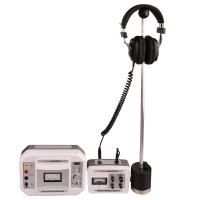
Underground Cable Locator with Signal Transmitter and Receiver
-
Category: Cable Identifier
-
Status: Available
-
ID: 28
Product Specification
| Payment Terms | T/T | Delivery Time | 5-8 work days |
| Packaging Details | wooden packaging | Supply Ability | 2000 units per year |
| Brand Name | XZH TEST | Place of Origin | China |
| Model Number | XHLJ504L | Certification | CE/ISO |
The Intelligent Multi Function Underground Pipeline Pathfinder Locator is a specialized cable route tracer designed for detecting underground cable layout positions and burial depths within a specified range. This system consists of a signal transmitter and receiver that work in unison to accurately pinpoint cable routes in probable burial areas.
The cable route tracer primarily consists of two main components:
A high-power signal transmitter essential for detecting underground cable routes.
- High power output with vibration resistance
- Strong anti-interference capability for stable, reliable operation
- Comprehensive protection against over current, open circuit, and short circuit conditions
- Precise and rapid tracing capability
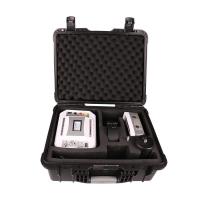
Underground Cable Locator with Signal Transmitter and Receiver
-
Category: Cable Identifier
-
Status: Available
-
ID: 29
Product Specification
| Payment Terms | T/T | Delivery Time | 5-8 work days |
| Packaging Details | wooden packaging | Supply Ability | 2000 units per year |
| Brand Name | XZH TEST | Place of Origin | China |
| Model Number | XHLJ504L | Certification | CE/ISO |
The Intelligent Multi Function Underground Pipeline Pathfinder Locator is specially designed for detecting underground cable layout positions and burial depths within a specified range. This system consists of a signal transmitter and receiver that work in unison to precisely pinpoint cable routes in probable burial areas.
The cable route tracer primarily consists of:
- Route signal transmitter
- Receiver (cable fault pinpoint detector)
- High power output with anti-vibration design
- Strong anti-interference capability
- Stable and reliable performance
- Comprehensive protection against over current, open circuit, and short circuit conditions
- More accurate and quicker tracing capabilities
- Reliable protection mechanisms
- Stable performance in various underground conditions
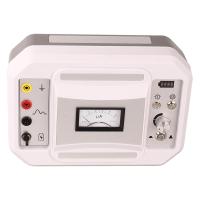
Underground Cable Identifier with Audio Frequency Output
-
Category: Cable Identifier
-
Status: Available
-
ID: 30
| Payment Terms | T/T |
| Delivery Time | 5-8 work days |
| Packaging Details | wooden packaging |
| Supply Ability | 2000 units per year |
| Brand Name | XZH TEST |
| Place of Origin | China |
| Model Number | XHLJ504L |
| Certification | CE/ISO |
Get in touch with us
- Our Company
- About Us
- Our Products
- Contact Us
- Reach Us
- Xi'an Xu&Hui Electromechanical Technology Co., Ltd.
- Building B8-01, Phase I, Ronghao Industrial City, No. 2098, Weiyang 9th Road, Gaoling District, Xi'an, China
Leave a Message, we will reply within 24 hours!
© Quality TDR Cable Fault Locator China Factory. All Rights Reserved (Terms of Use)
Developed and Managed by Ecer.com

In Addition, the following verified suppliers are recommended to your requirement.
You can chat with them at any time for more quotations: