Huilan Wuhan Technologies Co. Ltd
Huilan Wuhan Technologies Co. Ltd
- China
- Verified Supplier
- Home>
- Cable Route Tracer
- >WH Tracer 133 Portable Electric Cable and Metal Pipeline Locator

WH Tracer 133 Portable Electric Cable and Metal Pipeline Locator
- MOQ: 1 unit
- Price:
- Get Latest Price
| Model | WH Tracer 133 |
| Warranty | 12 Months |
| Transmitter working mode | direct connection, clamp coupling, inductive |
| Receiver frequency | 50Hz, 60Hz, LF, SSLOW, SSHIGH, 577Hz, 8KHz, 33KHz, 82KHz, 133KHz, initially 577Hz. |
| Transmitter output frequency | 577Hz,815Hz,8kHz, 33kHz, 65kHz,82kHz, 133kHz, SS Low, SS High,multi-frequency mode. |
| Application | Underground cable and pipe location |
| Display | Digital |
Explore similar products


- Product Details
WH Tracer 133
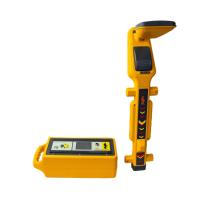
This cable pipe locator WH Tracer 133 uses the electromagnetic field signal of the underground cable to locate the cable, and gives the depth and current readings, so as to realize the cable detection function.
The transmitter and receiver of this device comply with Part 15 of the U.S. FCC Rules, this equipment complies with the relevant provisions of European Directive 1999/5/EC.
Features:
This device can be used for cable path search, power unlive and live cable identification
Supports current direction and phase indication functions, and has a unique technology that can display the current direction and phase of the tracking signal, effectively improving the accuracy of the search path.
At the same time, it can also detect the buried depth of the cable.
Transmitter with multiple frequency options, 577HZ, 815HZ,8KHZ,33KHZ, 65KHZ,82KHZ,133KHZ,SS LOW, SS HIGH, Multi-frequency mode.
Function with ohmmeter to test current external continuous resistance value.
It's suitable for use on the field, with IP 67 protection degree
Digital display of signal strength
Left and right arrows indicate pipeline location
Working frequency
Graphical display of signal strength
Operating mode
Rechargeable Battery power, up to 6 hours usage
The compass indicates the direction of the pipeline
Real-time display of pipeline depth and current
Transmitter instrument panel and function introduction
The transmitter is a signal source that can emit enough power, and is one of the cores of this set of instruments. It has complete functions, high intelligence and simple operation. It's suitable for use on the field, with rechargeable battery power, up to 6 hours usage, and IP 67 protection degree.
Panel Introduction
Button
1. Key 2. Output port 3. LCD display area 4. Frequency compound key 5. Power adjustment
6. Menu composite key 7. Charging port
Function introduction
1. Switch key: This switch is a self-locking switch; press it to turn on the power, the transmitter is in working state; pop up to disconnect the power supply, the transmitter is in a shutdown state.
2. Output port: This port is a multi-core dedicated aviation socket; it is used to change the output mode of the signal. Connecting the direct connection line is the direct connection mode; inserting the coupling clamp connection is the coupling mode; not connecting the line is the induction mode.
3. Liquid crystal display area: Display the required basic information.
4. Frequency key: This key is a jog soft switch; the frequency of the output signal can be changed every time it is pressed; the initial power-on is 577Hz. Initially 8KHz in sensing mode. In the frequency setting menu interface, press this key to select or cancel the frequency covered by the light bar; in the multi-frequency mode setting, press this key to choose to replace the output frequency channel.
5. Power key: This key is a jog soft switch; the output power can be changed once every time it is pressed, and it can be selected from low-grade, mid-grade, high-grade and full-grade. Flip through the frequency menu; in multi-frequency mode setting, press this key to select the output frequency.
6. Menu key: This key is a jog soft switch; press this key to cycle into the frequency setting menu, resistance measurement mode, and multi-frequency mode setting.
7. Charging port: This port is a Φ2.1 charging stand; it is used to connect a special charger to charge the battery.
Transmitter interface display content
| Frequency | Display the current output frequency |
| Power | Display the current output power; it can display low-grade, mid-grade, high-grade and full-grade respectively |
| Mode | Displays the current working mode; direct connection, coupling, and induction can be displayed separately. |
| Current | Display the current loop current value; the effective display is 0-999 mA. Impedance: Display the current loop impedance value; the effective display is 00001-20000 ohms. |
| Power | Indicates the current battery power; it is represented by a battery symbol, all black is full power, and the left is the current power percentage display. |
| Matching tip | When the circle below the picture starts to roll, it means that the transmitter is working stably. |
| Frequency setting | 577Hz, 815Hz, 8kHz, 33kHz, 65kHz, 82kHz, 133kHz, ss low, ss high, multi-frequency mode. |
Signal output mode - transmitter working mode
The transmitter can output different AC signals, which can be applied to the target cable in three ways (direct connection, clamp coupling, induction). To ensure reliable signal transmission on the target cable, there must be a reliable loop in the line. It can be an indirect loop composed of the ground, a capacitive loop composed of a distributed capacitance formed between a long enough cable and the ground, or a direct loop composed of short-circuit fault points between lines. Clamp coupling method is suitable for live cable. Different circuits meet different tests.
Brief introduction to the receiver
 Receiver panel and function introduction
A receiver is an integration of a system circuit capable of receiving a specific magnetic field and converting it into an electrical signal to display it and prompt the operator. It is the second core of this set of instruments. It is fully functional, highly intelligent, portable, lightweight, and easy to operate.
Interface display content function introduction
The cable direction is showed directly on the display.
Frequency: Display the current receiving frequency value; the initial value is 577Hz when power on, then can choose 50Hz, 60Hz, LF, SSLOW, SSHIGH, 577Hz, 8KHz, 33KHz, 82KHz, 133KHz.
Grating: The signal strength is indicated by the length of the grating; the grating moves from both sides to the middle, and the signal is too strong or out of range when the grating is full.
Three digits: the signal strength is indicated by the size of the number; the valid range is 00.0-99.9, when 99.9 is displayed, the signal is too strong or out of range.
Color compass: indicates the direction of the pipeline.
Depth & Current: Indicates the measured depth of the underground pipeline and the current on the pipeline. The depth range is 0.0 - 10.0m, accuracy is 5% measured value.
Gain: Indicates the magnification of the signal currently processed by the receiver, with a dynamic range of 000-140db; it is automatically adjusted by default. The initial boot is 60db.
Mode: Indicates the way the receiver receives the signal, and displays narrow peak , wide peak , trough , broad peak arrow , peak + trough and external equipment ; the initial power-on is wide peak. External devices are automatically recognized.
Battery level: Indicates the current battery level; it is indicated by the battery symbol.
Volume: Indicates the current working status of the buzzer, represented by the horn symbol plus a line, one line is low loudness, two lines are medium loudness, three lines are high loudness, and a cross is to turn off the buzzer. The initial power-on is to turn off the buzzer.
Left and Right Arrows: Arrows automatically appear off the cable to indicate the cable location ; two arrows appear above the cable.
Current direction: When using the SS frequency, this function can display the direction of the signal current to assist the operator in path finding.
Phase Indication: When using the SS frequency, the receiver will display the phase of the signal. Long press the frequency key to clear the phase.
Receiver characteristics
1) Cable positioning: Select the wave crest method and use parallel antenna positioning to quickly track the target cable. When it is above the cable, the signal is the largest and the two sides are reduced. Choose the valley method and use the vertical antenna for positioning. When there are no adjacent cables and interference sources, the positioning is more accurate and reliable. When the receiver is above the cable, the signal is the smallest and the signal on both sides is large.
2) Depth measurement: In direct connection mode, the depth is measured directly. Place the receiver directly above the pipeline, and keep the instrument body still when the direction indicated by the compass points straight ahead, and the real-time sounding value is displayed in the upper left corner.
Voice prompt
A great feature of this instrument is that it has a voice prompt, which can reduce the operator's eye fatigue when working for a long time, and make the detection work more simple and clear. The volume of the sound emitted by the receiver is proportional to the strength of the received signal. Under unity gain, when the sound from the receiver is loud and rapid, it means that the received signal is strong, and vice versa, it means that the received signal is weak. When the receiver is in the crest method, the sound is loudest and sharp right above the cable, and the sound is small and sparse on both sides. When the receiver is in the valley method, the sound is the smallest and most sparse right above the pipeline, and the sound is loud and tight on both sides.
Receiver working mode
working principle
When a signal is applied to the cable, there is a current on the cable, and the current generates a magnetic field that radiates around the cable. The frequency of the magnetic field is consistent with the frequency of the applied signal. The strength is the cable as the center of the circle and the radiation is decreased, and the direction is the tangent direction of a certain point on the radiation circle.
The receiver receives the magnetic field signal or the leaked electric field signal radiated by the cable through the internal antenna or external input device, and can be processed in two different working modes, and the signal strength change is prompted to the operator.
Signal reception mode - receiver working mode
Crest method (narrow peaks , broad peaks , broad arrows , peaks + valleys )
Get in touch with us
- Our Company
- About Us
- Our Products
- Contact Us
- Reach Us
- Huilan Wuhan Technologies Co. Ltd
- 68 Xiniuer St, Caidian District, Wuhan, Hubei, China
Leave a Message, we will reply within 24 hours!
© Quality TDR Cable Fault Locator China Factory. All Rights Reserved (Terms of Use)

In Addition, the following verified suppliers are recommended to your requirement.
You can chat with them at any time for more quotations: